Welcome to the used car market research Carroll IN resource built to help shoppers in Carroll County make confident decisions. Whether you live in Delphi, Flora, Burlington, or nearby, this page explains how to compare prices, evaluate vehicle history, estimate ownership costs, and understand local supply trends. You will find county level insights, checklists, and examples that show how mileage, model year, trim, and condition influence price and long term value. We also cover tools for valuation, total cost of ownership, Indiana fees and taxes, and timing strategies that matter in a rural market with cross county shopping. If you are exploring compact SUVs for winter road confidence, fuel efficient sedans for commuting, or trucks for work and towing, this guide connects the dots so you can align budget and needs. When you are ready to see real vehicles, visit the used inventory and research recently sold models for realistic expectations.
Explore related guides, market snapshots in nearby counties, and financing education throughout this page to build a plan that fits your goals.
This Carroll County market overview blends localized trends with practical steps you can use today. Compare similar vehicles, decode trim and options, and map total cost of ownership before you commit. For deeper reading, see our articles and county by county research pages linked below, including inventory and policy resources that support a smooth purchase.
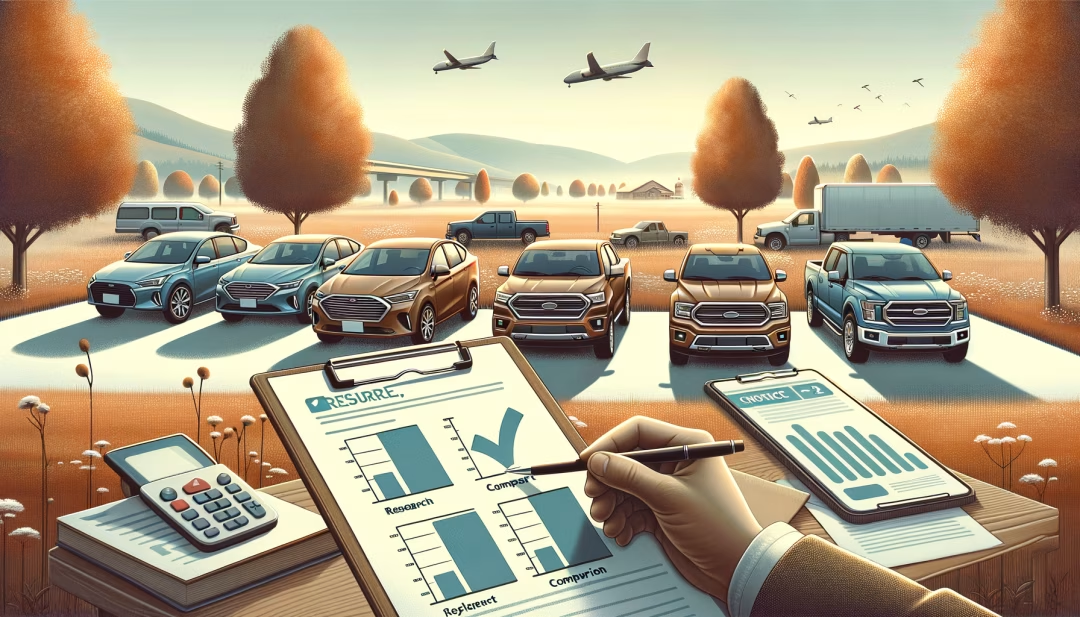
Used car market research Carroll IN starts with four pillars. Define your needs, benchmark prices using truly comparable vehicles, verify condition and history, and project total cost of ownership. Because Carroll County buyers often compare listings across nearby counties, it helps to watch supply in Tippecanoe, Cass, Clinton, White, and Howard as well. Broader search radiuses can reveal better trim mixes, colors, or equipment that fit your budget without sacrificing condition.
Before you price shop, decide how you will use the vehicle for the next three to five years. Commuters often prioritize fuel economy, safety tech, and reliability. Families look for room, car seat friendly layouts, easy to clean interiors, and advanced driver assistance features. Trades and towing require torque, axle ratios, transmission cooling, and payload headroom. Winters in north central Indiana make all season tires and traction control important. Rural driving also puts a premium on ground clearance and durable suspension components.
Good comparisons match year, trim, drivetrain, options, mileage band, accident history, and condition. Pricing can shift significantly based on a single package such as premium audio, driver assistance, or a towing suite. In a smaller market like Carroll County, one or two desirable trims can move fast, so compare active listings with recently sold examples to validate what buyers actually paid. You can reference current selection on the used inventory page and confirm real world benchmarks on the sold inventory page.
If you see outliers, check the vehicle identification number details. Service records, a clean title, and low ownership count can justify a higher ask, while accident records, aftermarket modifications, or incomplete maintenance may lower fair value.
A documented history and clean mechanical inspection can be worth thousands over time. Ask for service receipts, inspect wear items like brakes and tires, and listen for cold start noises. Confirm that safety tech and sensors function correctly. In rural areas, vehicles may spend more time on gravel or salted winter roads, so check for underbody corrosion and suspension wear. If possible, compare warm idle oil pressure, transmission shift quality, and alignment on a road test that includes highway speeds and low speed turns.
Total cost of ownership includes purchase price, taxes and fees, insurance, registration, fuel or charging, routine maintenance, and likely repairs. Indiana sales tax is generally calculated on the purchase price and you should plan for title, registration, and documentation fees. Insurance quotes can vary by ZIP code, driver history, and vehicle safety ratings, so get multiple estimates for your short list before deciding. A slightly higher purchase price on a vehicle with better efficiency, cheaper tires, and lower insurance can still cost less over the first three years.
In Carroll County, demand can rise ahead of winter for all wheel drive crossovers and again in spring for trucks and outdoor lifestyle vehicles. Agricultural cycles and local events can also influence supply. Because many buyers shop across county lines, price swings may appear first in nearby hubs. If timing is flexible, monitor a few models for several weeks and note how long comparable listings remain active. Faster turn signals a tight market where preparation matters.
A newer vehicle with higher mileage can outperform an older low mileage example if maintenance is thorough and highway driven. Trim can matter as much as model year, since safety and convenience packages affect usability and resale. For example, adaptive cruise, blind spot monitoring, heated seats, and remote start are valued in daily Indiana driving. When comparing, set a baseline for your must have features, then evaluate whether paying more for a higher trim reduces compromise and improves long term satisfaction.
Four cylinder turbo engines often balance power and economy for commuting on State Road routes, while naturally aspirated engines can reduce complexity. Trucks and larger SUVs with V6 or V8 power can serve towing needs, but factor in tire and brake costs. Hybrids help with stop and go savings if you drive through town frequently. Plug in hybrids can deliver short electric trips without full charging infrastructure. If you consider an electric vehicle, evaluate charger access on work and travel routes and plan for winter range impacts.
Well prepared buyers rely on data, not haggling. Bring three to five true comparables, a clean pre purchase inspection checklist, and current loan prequalification if you plan to finance. Note any reconditioning items like tires, brakes, or windshield chips and price them realistically. Respectful, transparent negotiation usually produces the best outcome, especially in a smaller market where inventory can be unique. If the numbers do not match your plan, it is fine to keep researching.
Prequalification helps you set a budget and compare annual percentage rates, terms, and total interest costs before test drives. Shorter terms often reduce interest paid but require a higher monthly budget. If you are rebuilding credit, focus on steady on time payments and reasonable loan to value to reduce risk. Down payments lower interest costs and can widen choices. If you want to read more about financing for varied credit situations, see county level pages such as second chance auto financing in Tippecanoe IN for general education.
For a trade in, gather keys, service records, and any accessories. Clean the vehicle and address low cost items that can impact perception. Obtain multiple offers when practical. A trade in may offer tax advantages depending on the timing and structure of the transaction, so compare net difference rather than only the individual trade value. If selling private party, account for time, marketing, and safe payment logistics.
Select a route that includes two lane county roads, a stretch of highway, and some stop and go driving in town. Listen for wind noise, rattles on rough surfaces, and inspect for stone chips typical of rural routes. Verify that lights, wipers, washer nozzles, defrosters, and heated features are working for winter readiness. Confirm spare tire or inflator kit, jack tools, and towing equipment if applicable.
You can review current selection on used inventory and study recent transactions on sold inventory to calibrate expectations. For broader education and timely articles, the blog covers shopping strategies, maintenance planning, and model spotlight pieces. If you want to learn about our team or policies, visit about us, privacy policy, and visitor agreement. When you need more details, the contact us page lists convenient options to reach the store.